
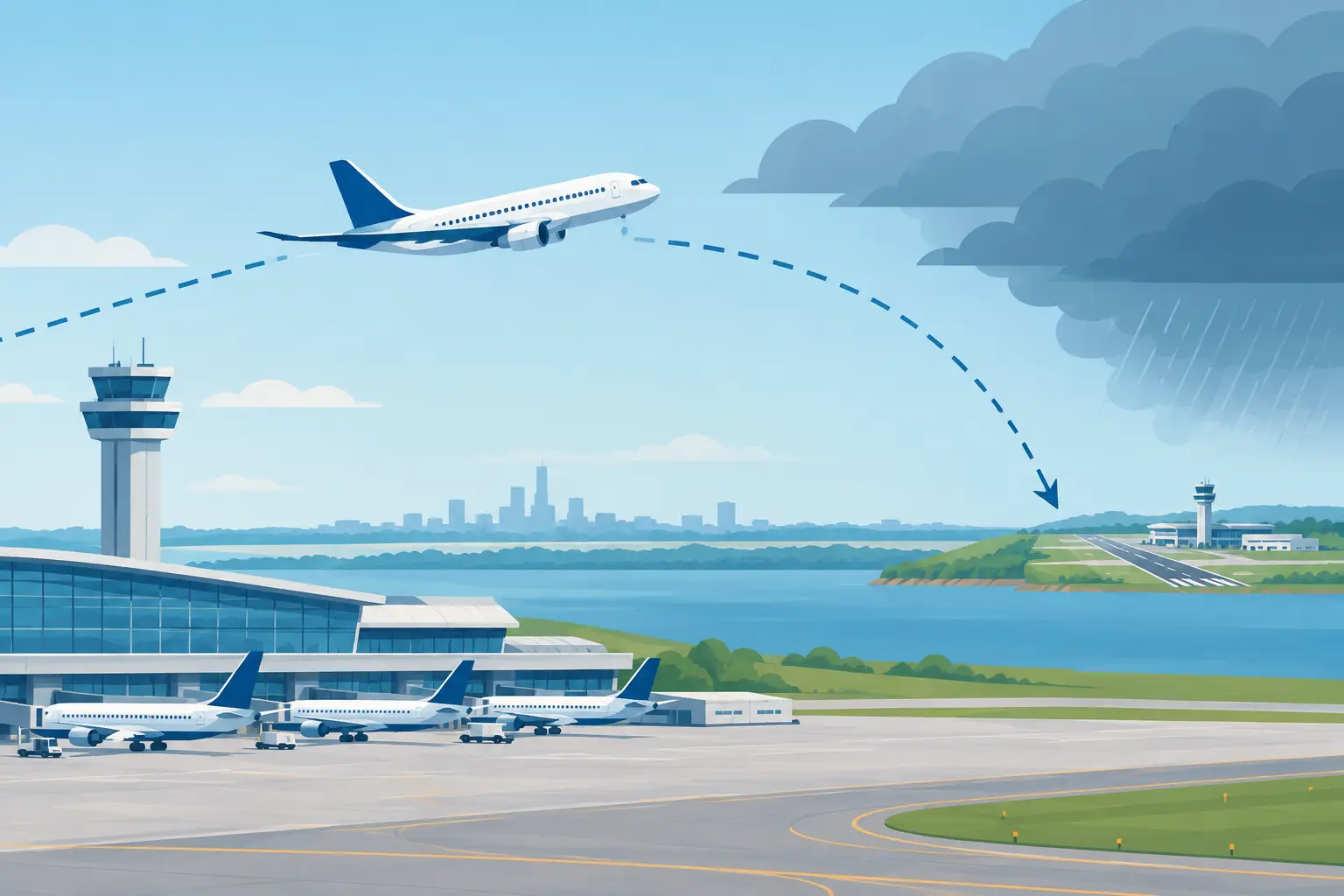
A diversion is not simply a flight landing somewhere unexpected. It is a fast-moving operational decision involving the flight crew, dispatchers, air traffic control, airport staff, the airline’s customer service team, and your plans on the ground. Knowing what happens during flight diversions can help you respond calmly, protect your schedule, and avoid being stranded without a reliable ride.
For travelers headed to or from Minneapolis-Saint Paul International Airport, the key is to separate what the airline controls from what you can control. You cannot choose the alternate airport or force a faster rebooking. You can, however, keep your contact details current, monitor official flight updates, and arrange ground transportation with a provider prepared to adjust when air travel changes.
Why Airlines Divert Flights
A flight diversion occurs when an aircraft lands at an airport other than its planned destination. Airlines do not make that call casually. A diversion adds fuel costs, disrupts aircraft schedules, affects crews, and can leave hundreds of passengers needing assistance. Safety and operational limits come first.
Weather is the reason most travelers recognize. Thunderstorms, low visibility, ice, high winds, or an airport closure can make a planned landing impractical. At MSP, winter weather can affect runway conditions and aircraft deicing operations, while summer thunderstorms may create ground holds or air traffic congestion.
But weather is only one reason. A flight may divert because of a mechanical indication, a medical emergency, a disruptive passenger, an issue at the destination airport, runway availability, or air traffic control restrictions. Occasionally, the plane is safe to continue flying but cannot land at its original airport before the crew reaches federally regulated duty-time limits.
The captain makes the final operational decision, supported by airline dispatch. The decision is based on current conditions, fuel remaining, alternate-airport capabilities, crew requirements, and the safest available path.
What Happens During Flight Diversions in the Air
Once the crew determines that a diversion is necessary, passengers usually receive an announcement explaining the broad reason and the new destination. Details may be limited while the crew manages the approach, communicates with dispatch, and works through changing conditions.
The aircraft then heads to an alternate airport selected for its safety, runway capability, weather, available services, and distance. That airport may be relatively close, such as Rochester or Duluth, or it may be several states away depending on the route, weather system, and airport capacity.
Passengers often wonder whether they can call someone, change a reservation, or make a connection while the plane is diverted. Until the aircraft lands and the crew permits device use, there is little to do beyond conserve battery and listen for updates. In-flight Wi-Fi may be available, but it is not always reliable during a diversion and should not be your only source of information.
A diverted landing can feel abrupt from a travel-planning perspective, but it is typically routine from a flight-safety perspective. Flight crews train for diversions, and alternate airports are part of every flight’s dispatch planning.
After Landing: Why You May Not Leave Right Away
Landing at the alternate airport does not always mean passengers can immediately enter the terminal. The aircraft may need to wait for a gate, ground staff, fuel, customs clearance on an international flight, or a decision from the airline on whether the flight can continue.
If the aircraft is parked away from a gate, passengers may remain onboard while the airline coordinates next steps. Federal tarmac-delay rules generally require airlines to provide an opportunity to deplane before a lengthy delay, subject to safety, security, and air traffic control conditions. Still, the timing depends on the specific airport and situation.
The airline may refuel the aircraft and wait for weather to improve. If the original destination reopens and the crew remains legal to fly, passengers may continue on the same plane. This is often the best-case operational outcome, although it can involve a long wait.
In other cases, the flight ends at the diversion airport. Passengers deplane, and the airline begins the more complicated work of rebooking, arranging accommodations when applicable, and repositioning aircraft and crews.
The crew’s clock can change the outcome
Airline crews have strict duty and rest rules. A diversion can use enough time that pilots or flight attendants can no longer legally continue, even after weather improves. When that happens, the airline must locate a replacement crew or delay the flight until the original crew has completed required rest.
This is why a short diversion can become an overnight delay. It is frustrating, but it is not a decision the crew can simply override to get everyone home faster.
Rebooking, Bags, and Connections
Once a flight is officially canceled or terminated at the diversion airport, airline representatives and digital tools usually begin offering rebooking options. Travelers with tight connections should act promptly through the airline app, website, or customer service line. Airport service desks can be useful, but lines may be substantial after a large disruption.
Rebooking options depend on seat availability, aircraft capacity, weather across the network, and the airline’s agreements with other carriers. A traveler headed to MSP may be placed on the next direct flight, routed through another hub, or offered a flight into a nearby airport. There is no single outcome that fits every diversion.
Checked baggage is another variable. If the flight continues after refueling, bags typically stay onboard. If passengers are required to deplane overnight, the airline may return checked bags, but that is not guaranteed. It depends on where the bags are loaded, security procedures, staffing, and whether the aircraft will resume service. Keep medication, a change of clothes, chargers, business materials, and essential documents in your carry-on whenever possible.
For international flights, customs requirements can add another layer. Travelers may need to clear customs at the diversion airport before continuing, even when MSP was the original destination.
Your Ground Transportation Plan Needs Flexibility
A diverted flight creates a problem beyond the terminal: the ride you arranged for MSP may be waiting while you are hours away, arriving much later than planned, or reaching a different airport altogether. Rideshare availability can be unpredictable during irregular operations, especially late at night, during weather events, or at smaller airports with limited driver supply.
A reservation-based car service offers a more controlled alternative. Professional transportation providers can monitor flight status, communicate directly with travelers, and adjust pickup timing when the flight remains bound for MSP. If a diversion changes the arrival airport, the provider can discuss practical options based on vehicle and chauffeur availability, distance, road conditions, and your final destination.
For corporate travelers, legal teams, families, medical travelers, and guests arriving for a major event, that communication matters. A missed flight or late-night rebooking should not automatically turn into a scramble for a rental car, an unfamiliar hotel, or a surge-priced ride.
At Airport Car Service MSP, scheduled airport transportation is managed around real-time flight activity and direct traveler communication. That approach is particularly valuable when an airline delay becomes a changed arrival time, an overnight disruption, or a new itinerary into MSP.
If your flight still arrives at MSP
If the flight eventually continues to Minneapolis-Saint Paul, notify your chauffeur service as soon as you have an updated arrival estimate. Share the flight number, new expected landing time, and any message indicating a terminal or gate change. Flight monitoring helps, but a direct update gives the dispatch team context that the public flight feed may not show.
Once you land, do not rush into the pickup area until you know whether your checked bags are arriving and where they will appear. A professional chauffeur can coordinate a designated pickup process, whether you need curbside service or a meet-and-greet arrangement inside the terminal.
If you are diverted away from MSP
First, confirm whether the airline expects to continue the flight or formally rebook you. Do not assume your original MSP pickup time still applies. Contact your transportation provider with your actual location, the airline’s stated plan, and your preferred next step.
Depending on the distance, weather, and chauffeur availability, private transportation from the diversion airport may be possible. In other circumstances, the more sensible choice is to stay overnight, take the airline’s rebooked flight to MSP, and move your vehicle reservation to the new arrival time. Reliable service means giving you clear options, not promising an impractical response.
A Practical Response When Your Flight Diverts
Keep your decisions orderly. Confirm the airline’s plan before booking a hotel or alternate ride, because a flight may resume sooner than expected. Charge your phone, save screenshots of flight notices and receipts, and notify anyone waiting for you. If the trip involves a meeting, medical appointment, wedding, or long-distance transfer, communicate the change early so every party can adjust.
Travel insurance, corporate travel policies, and credit card benefits may help with eligible meals, lodging, or other disruption costs. Coverage varies, particularly when weather is the cause, so retain documentation rather than relying on verbal explanations at the airport.
The most useful preparation happens before departure: book a flight-aware ground transportation service, travel with essential items in your carry-on, and leave realistic buffer time around important appointments. Air travel is unpredictable. Your arrival experience does not have to be.
When your itinerary changes, focus on the next confirmed step: the airline’s rebooking, your overnight plan if needed, and a chauffeur who knows exactly when and where to meet you. That is how an unexpected diversion becomes a managed delay rather than a transportation crisis.









Leave A Comment