
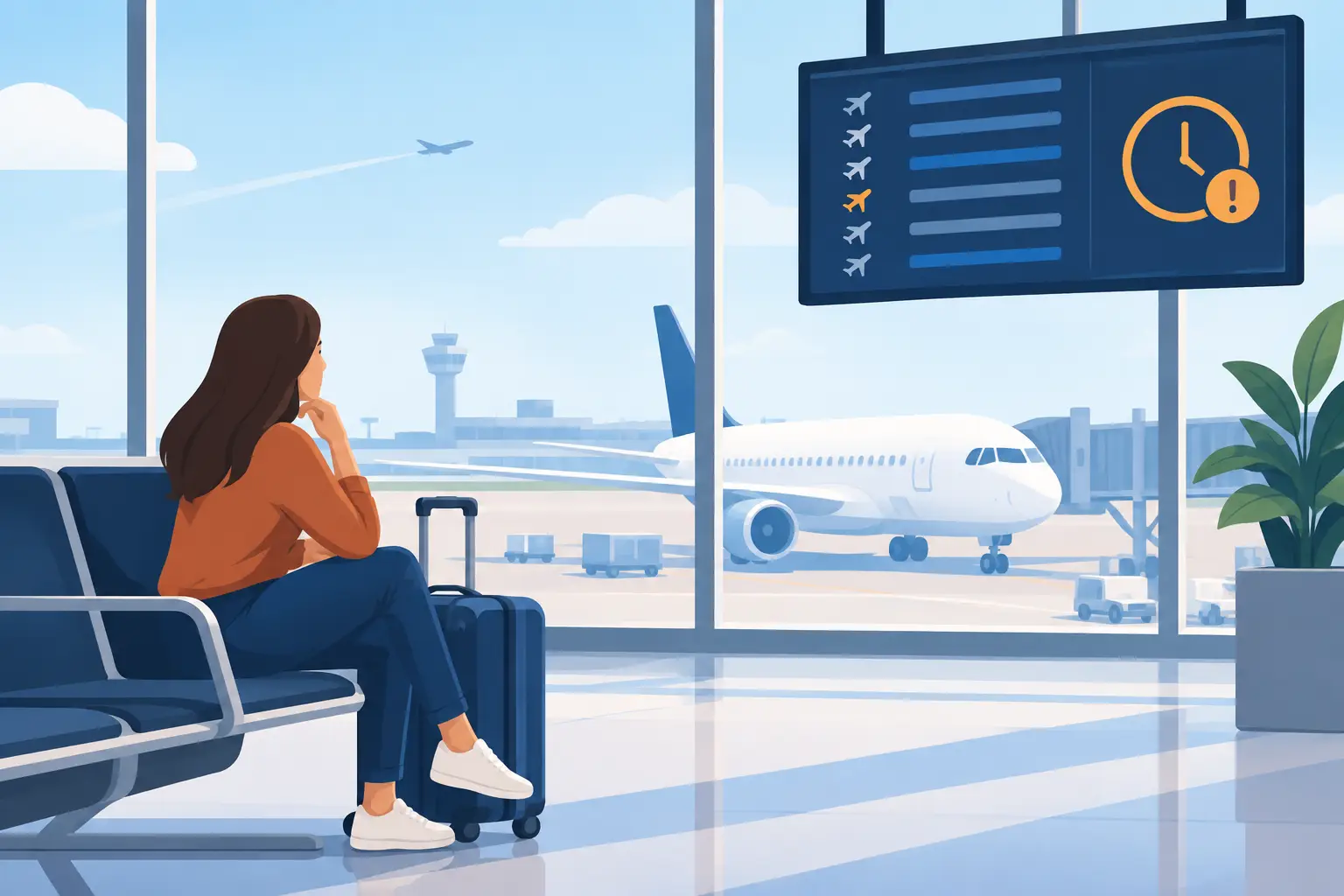
A 45-minute delay can change far more than an arrival time. It can push a client dinner, shorten a connection, keep a family waiting at baggage claim, or leave a traveler wondering whether their airport car is still there. Understanding what happens during flight delays helps you make better decisions before the gate agent makes an announcement.
For travelers arriving at Minneapolis-St. Paul International Airport, the most dependable plan is simple: arrange ground transportation that follows the flight, not an outdated clock. Air travel is unpredictable. Your ride should remain under control.
What Happens During Flight Delays?
A flight delay begins when an airline determines that the aircraft cannot depart or arrive according to its published schedule. The reason may be weather, air traffic control restrictions, a late-arriving aircraft, crew availability, maintenance, airport congestion, or an issue with boarding and baggage.
From the passenger’s perspective, the first visible change is usually a revised departure time in the airline app, on an airport display, or through a gate announcement. That estimate can move again. Airlines often receive new operational information in stages, particularly during thunderstorms, winter weather, or heavy traffic periods at major airports.
A delayed departure does not always mean the same delay at arrival. A flight may recover some time in the air, have a shorter taxi period, or arrive at a gate that is immediately available. It can also lose additional time after landing if the airport is congested, a gate is occupied, or baggage handling is backed up. For anyone arranging a pickup, the scheduled arrival time is only the starting point.
The Delay Often Starts Before You Notice It
The airline’s operations team, dispatchers, crew, airport staff, and air traffic control all have roles in moving an aircraft. A problem at any point can affect the entire sequence. A late inbound aircraft is especially common because the plane and its crew may already be operating behind schedule from an earlier city.
Weather delays are more complicated than rain at your own airport. A clear day in Minneapolis can still coincide with thunderstorms along the aircraft’s route, high winds at its origin, or air traffic restrictions in another region. During winter, deicing can add time before departure, while snow removal and reduced runway capacity can slow arrivals and departures across the airport.
Mechanical delays are handled cautiously for good reason. A maintenance team may need to inspect a system, replace a component, complete required paperwork, and release the aircraft for service. The delay is inconvenient, but a careful process is preferable to rushing a safety decision.
What Passengers Should Do While Waiting
The first priority is to monitor the airline’s app rather than relying only on the gate display. The app may show a gate change, a revised boarding time, a rebooking option, or a cancellation notice before a public announcement is made. Keep your phone charged and your travel documents accessible.
If a connection is at risk, act early. Speak with the airline agent, use the app’s rebooking tools, or call the airline if the line at the gate is long. When flights are disrupted across an entire region, seats on later flights can disappear quickly. Travelers with meetings, medical appointments, cruises, or family events should clearly explain any time-sensitive need, while recognizing that rebooking options depend on available seats.
For a longer delay, check what is included with your ticket and travel coverage. Airline obligations vary based on the cause of the delay, the itinerary, and the carrier’s policies. Weather-related disruptions are often treated differently from delays caused by airline-controlled operational issues. Save boarding passes, receipts, and notices if you may need them for reimbursement or an insurance claim.
Arrival Delays Create a Different Ground Transportation Problem
Landing is not the same as being ready for pickup. After touchdown, a traveler may still face taxi time, a gate hold, deplaning, a long walk through the terminal, checked-bag delays, customs processing on international arrivals, or a wait for a traveling companion.
This is where a fixed pickup arrangement can become unreliable. A friend may circle the airport repeatedly. A rideshare request may produce surge pricing, a distant pickup location, a driver cancellation, or a vehicle too small for the luggage. Taxis and shared shuttles can involve their own wait, particularly late at night or during weather events.
A professional airport transfer is designed around the full arrival process. Flight monitoring allows dispatch and the chauffeur to adjust for a delayed or early flight, while a private vehicle remains assigned to the reservation. Instead of reopening an app from baggage claim and hoping for availability, the traveler has a confirmed plan for the next leg of the trip.
How Flight-Monitored Chauffeur Service Responds
With a reservation-based car service, the operational response begins before the passenger leaves the aircraft. Dispatch monitors the flight status and updates the chauffeur’s timing based on the actual arrival. The chauffeur plans for the correct terminal, traffic conditions, and the service level booked, whether that is curbside pickup or meet-and-greet assistance.
For a business traveler, that may mean stepping into a late-model sedan or SUV after a delayed evening arrival and continuing to a downtown Minneapolis hotel, office, or private residence without another logistical decision. For families, medical travelers, and small groups, it means having a vehicle selected for passengers and luggage rather than accepting whatever vehicle happens to appear in a rideshare queue.
Airport Car Service MSP provides this type of flight-aware private transportation for MSP arrivals and departures, including executive travel, group transfers, long-distance service, and Mayo Clinic transportation. The objective is practical: preserve a dependable door-to-door plan when the airline schedule changes.
When the Flight Is Very Late
A significant delay may affect chauffeur scheduling, especially if the revised arrival falls well outside the original service window. This is why accurate flight information at booking matters. Provide the airline, flight number, date, passenger contact number, and destination address. If your itinerary changes to a new flight number or airport, notify the transportation provider as soon as possible.
Clear communication is particularly valuable for late-night arrivals, travelers requiring child seats, passengers with mobility needs, and groups using a Mercedes Sprinter van or multiple vehicles. The more the provider knows, the more confidently the service can be managed.
Departure Delays Require a Different Decision
A delayed outbound flight does not automatically mean you should leave for the airport later. Airlines can revise a delay, and security lines, parking, checked-bag cutoffs, and terminal distance still matter. If you are checking luggage, traveling internationally, or flying during a busy MSP morning, arriving at the airport with appropriate time remains the safer choice.
A chauffeur service can adjust a scheduled pickup when the delay is confirmed and the traveler’s airport arrival requirements allow it. But the right decision depends on the airline’s latest update, your fare type, baggage needs, and the consequences of missing the flight if the schedule moves back toward normal. For high-stakes travel, a little extra time at the terminal is usually a better trade-off than a rushed approach to the gate.
A Better Plan for the Parts You Can Control
You cannot control a weather hold, a gate shortage, or a late inbound aircraft. You can control how closely you monitor the itinerary, how quickly you respond to a threatened connection, and whether your ground transportation is prepared to adapt.
Before travel, confirm your flight number and pickup details. Keep your phone on after landing. If your plans change, communicate the new information promptly. Most of all, avoid turning an airline delay into a second problem on the curb. A professional chauffeur, a reserved vehicle, and flight-aware dispatch give the final mile of your journey the certainty the flight schedule may not provide.







Leave A Comment