

A private flight saves time only if the ground plan respects that same standard. After landing at an FBO, passengers should not be searching for a vehicle, comparing rideshare options, or waiting at a public curb. This private aviation ground transport guide covers how to arrange a chauffeur-driven vehicle that is ready for the aircraft schedule, the passenger list, and the next appointment.
For executives, visiting clients, legal teams, families, and medical travelers, the difference is operational control. A prearranged black car service provides a professional chauffeur, a late-model luxury vehicle, private door-to-door transportation, and a clear plan for arrivals that do not follow commercial-terminal routines.
Why Private Aviation Needs a Different Ground Plan
Private aviation operates on a different clock. A flight may arrive early, depart late, reposition to another FBO, or adjust its schedule around weather, crew duty limits, and passenger meetings. Ground transportation has to account for those variables without creating another task for the traveler or flight coordinator.
Commercial airport pickup often centers on terminal doors, baggage claim timing, and a fixed meeting point. At an FBO, the vehicle may need to enter a designated access area, coordinate with the facility, or stage nearby until the aircraft is cleared and passengers are ready. The right process depends on the FBO’s security procedures and ramp-access rules.
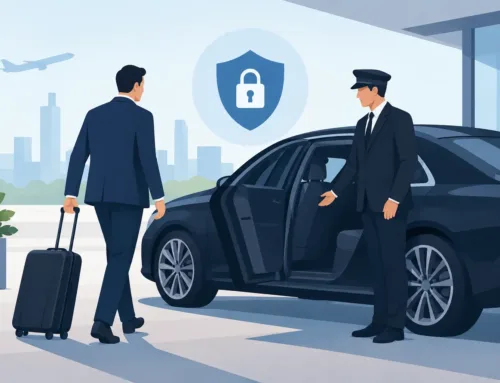
A professional chauffeur service plans for this. Flight details are monitored, pickup instructions are confirmed in advance, and the chauffeur arrives with enough time to be properly positioned. The goal is simple: when passengers step away from the aircraft, their next vehicle is already accounted for.
Private Aviation Ground Transport Guide: What to Book
Start with the passenger count, luggage volume, destination, and schedule. Vehicle selection should not be an afterthought, particularly when passengers are carrying golf bags, presentation materials, medical equipment, ski gear, or multiple large suitcases.
For one to three travelers, an executive sedan provides a quiet, polished setting for airport transfers, downtown meetings, and private residences. A Mercedes S-Class-class sedan is often the right choice when privacy and executive presentation matter most.
For families, senior leaders traveling together, or passengers with substantial luggage, a Cadillac Escalade-class SUV offers more space without moving into a group-transport format. It is a practical choice for airport-to-hotel transfers, regional travel, and trips where a sedan’s trunk capacity may be limiting.
Mercedes Sprinter vans suit small groups, corporate teams, wedding parties, and travelers who need space for both people and baggage. They can also be useful for a flight department arranging multiple passenger movements from one arrival. A larger vehicle is not always the better vehicle, however. For a solo executive, a sedan may offer a more discreet arrival and faster access at a hotel or office entrance.
When booking, provide the aircraft tail number or flight details, the FBO name, expected arrival time, passenger count, luggage needs, destination, and a day-of-travel contact. If the trip includes several stops, state that clearly. A chauffeur can support a multi-stop itinerary, but it should be scheduled as hourly service or a planned route rather than treated as an informal add-on.
Arrival Coordination at MSP and Regional FBOs
At Minneapolis-St. Paul, private aviation passengers may use an FBO rather than the main airline terminals. The chauffeur should be assigned to the correct facility, with instructions that reflect the FBO’s access requirements and the passenger’s preferred exit point.
Meet-and-greet service can be arranged where permitted. In other cases, the chauffeur may stage at an approved location and communicate directly with the traveler or flight coordinator once the aircraft is on the ground. Neither approach is automatically better. The appropriate method depends on security rules, weather, passenger mobility, and how quickly the aircraft will be turned.
Clear communication prevents the common failure points. Confirm whether passengers will deplane immediately, whether checked items or catering need to be removed, and whether the aircraft may arrive at a different FBO because of parking or handling requirements. For high-profile passengers, limit day-of contacts to the flight coordinator, executive assistant, or designated security professional.
Air travel is unpredictable. Your ride should not be. Flight monitoring helps account for schedule changes, but it does not replace accurate booking details. If a tail number, FBO, or destination changes, notify the transportation provider as soon as possible so the chauffeur and dispatch team can adjust the plan.
Plan the Departure as Carefully as the Arrival
A dependable departure begins with the required FBO arrival time, not the flight’s published departure time. Private flyers may have shorter boarding timelines than commercial passengers, but crews, security procedures, international documentation, catering, and baggage loading can still affect when passengers should arrive.
For an important departure, build in a margin for Minneapolis traffic, construction, weather, and the time needed to collect passengers from separate locations. A chauffeur-driven service removes the parking and vehicle-return variables, allowing passengers to exit directly at the FBO rather than navigating a public garage or waiting for a rideshare driver to find the right entrance.
For an executive leaving a hotel after a board meeting, that may mean scheduling a sedan at the front drive 15 minutes before the final meeting ends. For a family departing from a lake home with several bags, it may mean allowing extra loading time and choosing an SUV or Sprinter van. The details change, but the principle does not: the vehicle plan should protect the flight schedule rather than merely react to it.
When Rideshare Is the Wrong Risk
Rideshare can work for a casual point-to-point trip. It is less suitable when timing, privacy, vehicle condition, and professional presentation are part of the travel requirement.
A rideshare driver may cancel, arrive in a vehicle too small for the party, have limited familiarity with FBO access, or be unable to wait through an unexpected schedule change. The traveler may also need to share pickup instructions by text while coordinating a flight, luggage, and guests. Those are avoidable distractions.
A reserved black car service provides a known vehicle category, a professionally presented chauffeur, private transportation, and a dispatch-supported plan. Flat-rate pricing also gives corporate travel managers and executive assistants a clearer cost expectation than surge-priced, on-demand options.
That does not mean every trip requires the same level of service. A short transfer for one passenger may call for a sedan, while a visiting leadership team may need two SUVs or a Sprinter. The value comes from matching the service to the risk and requirements of the trip.
Long-Distance Private Flight Transfers
Private aviation frequently connects MSP-area FBOs with destinations beyond the Twin Cities. A passenger may land at MSP and continue to Rochester for a Mayo Clinic appointment, travel to a corporate campus in Wisconsin, or head directly to a resort, residence, or regional event.
For these trips, private door-to-door transportation is often more practical than arranging a rental vehicle after landing. The passenger can work, rest, make confidential calls, or simply recover from travel while the chauffeur handles the route, fuel stops if needed, weather conditions, and final arrival.
Long-distance service should be reserved with a realistic schedule. Include the return plan if it is known, especially for medical appointments, board meetings, or events with a fixed end time. If the return is uncertain, hourly availability or a flexible pickup window may be the better arrangement.
A Better Standard for Guest and VIP Travel
Ground transportation is part of the arrival experience. When a client, speaker, investor, or family member lands by private aircraft, the vehicle waiting outside sets the tone before the first meeting or event begins.
Airport Car Service MSP provides scheduled, 24/7 chauffeur service for private aviation transfers throughout Minneapolis-St. Paul, Minnesota, and Wisconsin. With flight-aware coordination, business-attired chauffeurs, luxury sedans and SUVs, and group-ready Sprinter vans, the service is built for travelers who need their plans handled correctly.
The best private aviation transfer is usually the one passengers barely have to think about: the right vehicle, at the right FBO, with a chauffeur who is prepared before the cabin door opens.








Leave A Comment